
The best glues for plastic on plastic match your plastic type, joint size, and repair needs.
A cracked storage bin, loose model part, or broken plastic handle can make a useful item seem ready for the trash. Yet the right glue can save many small, noncritical parts. The hard part is not finding a strong adhesive. It is finding one that bonds your exact type of plastic. I favor Gorilla Super Glue Brush and Nozzle for small repairs on compatible rigid plastics. For acrylic projects, I would look first at Weld-On 16. This guide compares seven options, explains their limits, and helps you avoid buying a glue that cannot bond your material.
See the differences between my top picks at a glance.
| Product | Listed format | Best-fit task | Application or size | Main caution | Shop |
|---|---|---|---|---|---|
| GH1200 2-in-1 | Clear super glue | Small, close-fitting repairs | Brush and nozzle | Check the exact plastic first | View on Amazon |
| Gorilla Brush and Nozzle | Clear super glue | General rigid-plastic repairs | Two-way applicator; 12 g | Not recommended for PE or PP | View on Amazon |
| Plastic Super Glue Liquid | Liquid cyanoacrylate | Small model joints | Clear liquid | Fast set gives little adjustment time | View on Amazon |
| Weld-On 16 | Acrylic plastic cement | Compatible acrylic assemblies | Medium-bodied; listed 5 fl oz tube | Solvents need careful handling | View on Amazon |
| All-Purpose Super Glue Liquid | Instant adhesive | Repeated small repair jobs | Listed 1.75 oz package | Confirm plastic compatibility | View on Amazon |
| Clear Plastic Repair Glue Kit | Listed clear super glue kit | Models and compatible printed parts | Check current kit contents | Broad use claims need verification | View on Amazon |
| WoldoClean Plastic Super Glue | Plastic-focused super glue | Compatible PVC and acrylic parts | Listed 50 g bottle | Do not assume flexible-PVC suitability | View on Amazon |
This article contains affiliate links. I may earn a commission from qualifying purchases. These are product-information reviews, not hands-on test reports. I cannot verify live Amazon feedback, prices, or listing changes. The ratings below reflect listed features and task suitability, not measured bond strength or Amazon star ratings.
The Best Glues for Plastic on Plastic do not all work in the same way. Super glue bonds surfaces with an adhesive layer. A compatible solvent cement softens the plastic at the joint so the parts can fuse. Neither approach suits every plastic. Before you buy, check the material code, read the glue label, and test a hidden spot when looks matter.
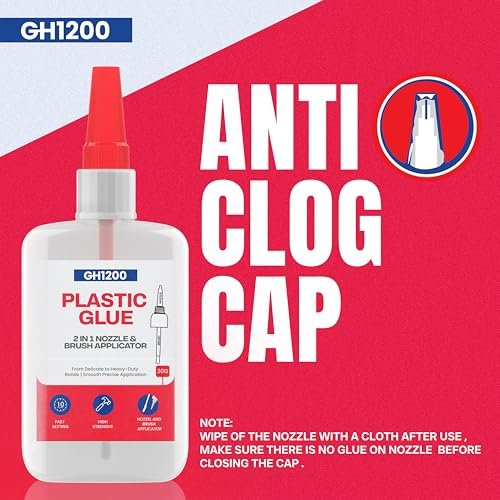
GH1200 2-in-1 Super Glue for Plastic

GH1200 stands out for its brush and nozzle, which give you two ways to place the glue. I like this format for a repair box that holds both small parts and flat plastic pieces. The nozzle can help place a small drop, while the brush can spread a thin coat across a wider joint. Its listed clear finish also makes it worth considering when a dark glue line would spoil the repair.
I would choose it for a small, close-fitting joint after checking that the label supports the plastic. I would not treat the words “heavy duty” as proof that it can fix a loaded handle or stressed hinge. Clear super glue can still leave haze, marks, or visible residue on some surfaces. A test on scrap plastic is the best way to check both bond quality and looks before using it on the main piece.
Pros:
- The brush gives you a way to coat a broad, flat contact area.
- The nozzle suits small joints that need a controlled drop.
- Two application options reduce the need for separate glue tools.
- The listed clear finish suits repairs where color matters.
- The fast-setting format can help with small parts that are hard to clamp.
- It is a practical format for varied household craft tasks.
Cons:
- The supplied listing details do not establish compatibility with every plastic.
- Quick setting can leave little time to correct a poor fit.
- A clear formula does not guarantee a stain-free or haze-free result.
What Amazon Buyers Are Saying
I cannot verify current Amazon reviews for this listing, so I cannot report a genuine buyer consensus. Look for reviews that name the plastic and show the cured joint. For this product, the most useful feedback would cover brush control, nozzle clogging, and whether a repaired part held up after normal use.
My Recommendation
I would shortlist GH1200 if applicator choice matters more than a specialized bonding system. It looks useful for neat, small repairs, but I would confirm its material guidance before buying. My provisional overall rating is 3.7/5 for its listed feature set and repair fit. I would not choose it for a safety-critical part or a joint that must bend often.
| Category | Editorial Rating |
|---|---|
| Application options | 4.5/5 |
| Small-repair suitability | 4/5 |
| Material guidance available | 2.5/5 |
| Purchase appeal for mixed tasks | 3.5/5 |
| Overall Rating | 3.7/5 |
Gorilla Super Glue Brush and Nozzle, 12 g

Gorilla Super Glue Brush and Nozzle is my leading general-use pick for small repairs on compatible rigid plastics. The two-way applicator offers a useful mix of reach and control. I would use the brush for a thin coat on a flat face and the nozzle for a small tab or narrow joint. The 12 g size also makes sense for an occasional repair kit rather than a busy workshop.
The key limit is plastic type, not brand strength. Gorilla does not recommend this glue for polyethylene or polypropylene, two common plastics found in household goods. Its product directions also provide application and handling guidance that you should read before use. I would keep this glue for snug joints, not large missing sections or parts that flex with each use.
Pros:
- The brush and nozzle cover two common repair needs.
- A small bottle suits light home use without buying a large supply.
- The clear finish avoids adding a dark line at the joint.
- The nozzle helps reach small contact points on rigid parts.
- The brush can help spread a thin coat instead of a large puddle.
- Published material limits make it easier to avoid a poor match.
Cons:
- It is not recommended for polyethylene or polypropylene.
- It is not a good substitute for a gap-filling repair material.
- Fast bonding leaves limited time to move parts into place.
What Amazon Buyers Are Saying
I cannot verify the live review set or current star score. When checking Amazon feedback, separate comments about glue strength from complaints about a dried brush or clogged nozzle. A strong review should name the plastic, explain the joint, and say how long the repair lasted. Reviews of other Gorilla formulas do not prove how this version performs.
My Recommendation
I would buy this first for a basic home repair kit when the parts are rigid, fit well, and use a supported plastic. Among the Best Glues for Plastic on Plastic, it offers a useful balance of applicator choice and clear use limits. My editorial overall rating is 4.3/5. That score reflects purchase suitability, not a claim that it beats every glue in strength.
| Category | Editorial Rating |
|---|---|
| Application options | 4.5/5 |
| Rigid-plastic repair fit | 4/5 |
| Clarity of use limits | 4.5/5 |
| Occasional-use package fit | 4/5 |
| Overall Rating | 4.3/5 |
Plastic Super Glue Liquid for Models

This option is listed as a clear liquid cyanoacrylate adhesive for models. Cyanoacrylate is the glue family most people call super glue. I would consider it for small, close-fitting parts where a thick bead would get in the way. Its model-focused positioning makes it a candidate for tiny rigid pieces, though the model’s plastic still needs to match the adhesive.
Liquid glue can spread beyond the joint if you use too much. On a model, that can mark a painted face or spoil a fine surface detail. I would dry-fit the parts, hold them in place with a simple support, and apply only the amount the label calls for. For clear windows or display pieces, I would test first because super glue can cause a white haze called blooming.
Pros:
- The liquid format suits small joints with close surface contact.
- A clear adhesive avoids adding an opaque color to the seam.
- The listed model use aligns with small-part assembly tasks.
- Instant bonding can reduce hold time on a tiny supported part.
- Small drops can help keep glue away from fine surface details.
- It offers an alternative when a model part does not suit a chosen solvent cement.
Cons:
- Liquid glue can run onto nearby surfaces.
- Super glue haze may spoil clear or glossy model parts.
- The listing title does not confirm exact viscosity or broad material compatibility.
What Amazon Buyers Are Saying
I cannot verify buyer comments for this exact listing. Useful model-building reviews should discuss flow, tip control, surface marks, and cured bond quality. Check whether reviewers used polystyrene, resin, or a printed plastic. Those materials can behave quite differently, so a successful bond on one does not prove equal results on another.
My Recommendation
I would consider this glue for a model bench, not as an all-purpose answer for every plastic repair. It is most appealing when the parts fit closely and you can control a liquid adhesive. My provisional overall rating is 3.6/5. Before purchase, I would want clear instructions, material guidance, and details about the bottle tip.
| Category | Editorial Rating |
|---|---|
| Small-model task fit | 4/5 |
| Liquid-format usefulness | 4/5 |
| Material guidance available | 2.5/5 |
| Fine-joint purchase appeal | 4/5 |
| Overall Rating | 3.6/5 |
Weld-On 16 Acrylic Plastic Cement

Weld-On 16 is the specialist pick here for compatible acrylic work. The listing describes a clear, medium-bodied, fast-setting acrylic plastic cement in a 5 fl oz tube. Unlike ordinary super glue, a compatible solvent cement softens the joint surfaces so they can fuse. I would look at this option for an acrylic display, small enclosure, or similar project where the material is known.
The medium body can help when a very thin cement would be hard to control, but it does not replace a well-fitted joint. Too much cement can leave a visible bead or damage the surface near the seam. I would support the pieces before applying it and follow the technical guidance for the exact materials involved. The listed low-VOC wording does not mean the product is free of solvent hazards or safe to use without ventilation.
Pros:
- Its acrylic focus makes it a more targeted choice than general super glue.
- The medium-bodied format offers a different handling option from thin cement.
- The clear formulation suits many visible acrylic assemblies.
- The listed tube format allows direct placement near a joint.
- A compatible solvent-welded joint can suit acrylic fabrication.
- The listed 5 fl oz size may suit several small project assemblies.
Cons:
- Solvents can mar visible plastic surfaces if they spill or spread.
- It requires ventilation and careful label-based handling.
- It is not a universal adhesive for all clear or rigid plastics.
What Amazon Buyers Are Saying
I cannot confirm current customer feedback for the supplied listing. For acrylic cement, seek reviews that show seam quality and identify the sheet material. Comments about leaks, tube condition, and ease of placement also matter. A report of a neat display joint should not be read as proof that the cement suits a pressure vessel or load-bearing assembly.
My Recommendation
I would choose Weld-On 16 over a general super glue when the project uses compatible acrylic and calls for this type of cement. It is one of the Best Glues for Plastic on Plastic for a defined task, rather than a broad household fix. My editorial overall rating is 4.4/5 for acrylic-project suitability. Check the current technical sheet, tube size, and seller details before ordering.
| Category | Editorial Rating |
|---|---|
| Acrylic-specific task fit | 4.5/5 |
| Medium-body application option | 4.5/5 |
| Defined bonding method | 4.5/5 |
| Small fabrication project appeal | 4/5 |
| Overall Rating | 4.4/5 |
All-Purpose Super Glue Liquid, 1.75 oz
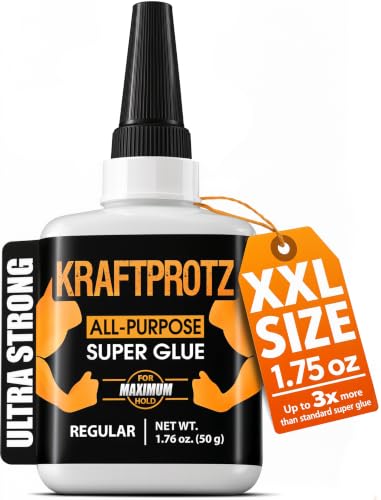
This all-purpose liquid adhesive comes in a listed 1.75 oz package, which may appeal to someone who makes frequent small repairs. I would compare it with smaller bottles when supply size matters more than a brush applicator. Its instant-adhesive format points toward close-fitting joints rather than large voids. The broad name, however, does not show which plastics it can bond well.
A larger package only offers good value if you can use the glue before it thickens or cures in storage. I would check the closure, use instructions, and recommended shelf life before choosing it for a workbench. For plastic-on-plastic bonds, I would also seek an explicit list of supported materials. If that guidance is absent, I would prefer a more clearly specified product even if its cost per ounce is higher.
Pros:
- The listed package size may suit repeated small repair work.
- A liquid format can suit snug joints with broad surface contact.
- The all-purpose positioning may reduce the need for several glues if compatibility checks support your tasks.
- Instant bonding can help with small parts that stay aligned easily.
- It offers a larger-package option for buyers who use glue often.
- Its simple format may suit an organized workshop with separate application tools.
Cons:
- “All-purpose” does not mean it bonds all plastic types.
- A larger bottle may waste more glue if the contents cure during storage.
- The supplied details do not establish the nozzle design or material limits.
What Amazon Buyers Are Saying
I cannot verify live reviews or repeat-use reports for this product. For a larger glue package, I would focus on comments about storage life, cap sealing, and consistency over time. Compare reviews from people who used the glue once with those who opened it many times. Those use patterns test different parts of the buying decision.
My Recommendation
I would consider this option for regular use only after checking its instructions and plastic compatibility. I would not buy it just because a larger package appears cheaper. My provisional overall rating is 3.3/5 for the available feature information. A small, well-sealed bottle with clear material guidance may offer better real value for most occasional repairs.
| Category | Editorial Rating |
|---|---|
| Frequent-use package fit | 4/5 |
| Close-fitting joint suitability | 3.5/5 |
| Material guidance available | 2.5/5 |
| Occasional-use purchase appeal | 3/5 |
| Overall Rating | 3.3/5 |
Clear Plastic Repair Glue Kit for Models

This glue kit targets models, miniatures, and 3D prints, including listed uses such as PLA and acrylic. I see it as a hobby-focused candidate rather than a proven answer for every material named in the title. Printed parts can have rough faces, small gaps, and weak layers that affect the repair. A good bond at the seam cannot fix poor strength elsewhere in the print.
The product title also includes waterproof and safe-use claims, which need more detail before I would rely on them. Water resistance after full cure does not automatically mean the glue suits constant immersion. Safe handling also depends on the formula, ventilation, skin protection, and intended use. I would confirm the adhesive type and kit contents before deciding whether it offers a real advantage over a basic bottle of super glue.
Pros:
- The listed model and miniature uses align with small hobby repairs.
- PLA appears in the stated use list, which gives print makers a starting point to check.
- The clear finish may suit visible seams on craft projects.
- The kit format could suit a hobby bench if the included tools meet your needs.
- It targets repair tasks that often involve small rigid components.
- Its broad listed uses encourage comparison across several workshop materials.
Cons:
- The supplied title does not establish the exact adhesive chemistry.
- Waterproof wording alone does not prove immersion or outdoor durability.
- Broad car and metal claims do not establish safety-critical repair suitability.
What Amazon Buyers Are Saying
I cannot verify current customer reviews for this kit. For printed-part repairs, look for reports that name the filament and show the break. Useful feedback should also explain whether the glue held or the print failed beside the seam. Check reviews that describe the actual kit contents, since a long listing title does not tell you what tools arrive.
My Recommendation
I would shortlist this kit for hobby work only if the current listing provides clear instructions and confirms the included accessories. For shoppers comparing the Best Glues for Plastic on Plastic, it offers a relevant use focus but needs closer checking. My provisional overall rating is 3.4/5. I would avoid using it for hot, loaded, or safety-related vehicle parts.
| Category | Editorial Rating |
|---|---|
| Hobby-task relevance | 4/5 |
| Listed printed-part scope | 3.5/5 |
| Formula and contents clarity | 2.5/5 |
| Conditional purchase appeal | 3.5/5 |
| Overall Rating | 3.4/5 |
WoldoClean Super Glue for Plastic, 50 g

WoldoClean offers a listed 50 g package with a plastic-focused description that names PVC and acrylic. That makes it worth comparing for a workshop that handles those materials often. I would still check whether the instructions distinguish rigid PVC from soft, flexible PVC. Those versions can behave differently because soft PVC contains additives that may affect adhesion.
I would also distinguish this product from a dedicated acrylic solvent cement. The words “acrylic adhesive” in a listing do not prove that it creates a solvent-welded joint. For a clear acrylic display, I would compare the bonding method, risk of haze, and seam appearance before buying. For repeated small repairs, the 50 g size may be useful, but only if its storage life fits your pace of work.
Pros:
- The plastic-focused listing is more specific than a broad all-purpose label.
- PVC and acrylic are named as intended material categories.
- The listed 50 g size may suit regular workshop use.
- The super-glue format can suit close-fitting rigid repair joints.
- It offers a larger supply for buyers who make several small repairs.
- Its stated material focus makes it easier to ask targeted compatibility questions.
Cons:
- The supplied details do not confirm suitability for flexible PVC.
- It should not be assumed to work like acrylic solvent cement.
- A larger bottle may be poor value for rare use if it dries before you finish it.
What Amazon Buyers Are Saying
I cannot verify current Amazon buyer feedback for this listing. I would seek reviews that name the material, describe surface prep, and discuss the repair after several uses. For acrylic, photos of a clean seam matter. For PVC, reports should make clear whether the reviewer bonded a rigid part, a soft sheet, or another type of component.
My Recommendation
I would consider WoldoClean for repeated repairs on materials that its full label supports. I would prefer a smaller bottle for rare use and a dedicated cement for an acrylic project that calls for solvent welding. My provisional overall rating is 3.6/5. Its listed size and material focus are useful, but neither replaces clear instructions or a test bond.
| Category | Editorial Rating |
|---|---|
| Listed material focus | 3.5/5 |
| Frequent-use package fit | 4/5 |
| Material-limit clarity available | 3/5 |
| Workshop purchase appeal | 4/5 |
| Overall Rating | 3.6/5 |
How to Choose Best Glues for Plastic on Plastic
I choose plastic glue by the material first, the joint second, and the package last. A low price or a strong-sounding label cannot fix a poor chemical match. The Best Glues for Plastic on Plastic should also fit the way you apply, cure, and store the adhesive. These three checks can save both money and the part you want to repair.
1. Identify the Plastic and Match the Bonding Method
Look for a molded code on the item. PP means polypropylene. PE, HDPE, and LDPE refer to forms of polyethylene. ABS, PVC, and PS identify other common plastics. PMMA is acrylic. These codes help narrow your choice, though a code alone does not prove that a specific glue will work.
Polyethylene and polypropylene are hard to bond with many standard glues. Their surfaces resist wetting, which means the adhesive may not spread and grip well. A specialty system may use a primer or surface treatment. Do not buy one of the standard super glues in this guide for PE or PP unless its instructions clearly support that use.
For acrylic, consider a compatible acrylic cement when the project calls for fused joints. For polystyrene models, a purpose-made model cement may suit the job better than general super glue. For mixed plastics, check both surfaces. A glue that works on one side may fail on the other.
I also check whether a part has paint, a glossy coating, or a soft outer layer. The glue may bond to that layer rather than the solid plastic beneath it. If the coating peels away, the joint can fail even when the adhesive itself stays intact. Test on scrap or a hidden area before you commit.
2. Check Joint Fit, Movement, and Surface Prep
Super glue usually makes the most sense for small parts that meet closely. It is not my first choice for a missing chunk, a wide gap, or a joint that bends often. A compatible gap-filling epoxy or flexible adhesive may suit those tasks better. Those are different product types, so do not assume a liquid super glue can do the same work.
Think about how the force reaches the joint. A broad overlap gives the glue more contact area than a thin broken edge. A handle also sees leverage, which can pull a small joint apart. For a part that carries weight, takes impact, or protects someone from harm, replacement may be wiser than glue.
Clean the surfaces with a method safe for the plastic and approved by the adhesive maker. Do not assume acetone is safe; it can damage several plastics. Let the parts dry, then dry-fit them before applying glue. If the label calls for light sanding, use it with care and keep visible clear surfaces protected.
Use a small amount and support the pieces while the bond develops. Initial grab is not the same as full cure. Leave the repair unloaded for the time stated on the package. More glue does not always make a stronger joint and can make cleanup much harder.
3. Compare Application Control, Safety, and Real Value
A brush helps spread a thin coat across a flat face. A nozzle helps place a small drop near a narrow joint. Liquid glue can flow into unwanted areas, while a thicker product may offer more placement control. I choose the applicator to fit the part rather than buying the largest bottle available.
Value depends on how much glue you can use, not just the price per gram. A 50 g bottle may suit frequent repair work. A 12 g bottle may make more sense for one or two jobs each year. Check the cap design, storage instructions, and shelf-life guidance before paying for extra volume.
Read the safety label and safety data sheet. Super glue can bond skin and eyes, while solvent cement can release harmful or flammable vapors. Keep glue away from children, use suitable ventilation, and follow the maker’s protection advice. Chemical safety guidance stresses the need to understand hazards and control exposure.
Do not wipe fresh cyanoacrylate with cotton or wool. Contact with these materials can cause a rapid heat-producing reaction. Also, do not assume a fully cured glue is approved for food contact, drinking water, or medical use. Those uses need specific approval, not a general “safe” claim.
When I compare the Best Glues for Plastic on Plastic, I place clear material guidance above broad marketing terms. I also check recent, product-specific feedback rather than relying on a headline star score. A neat test bond on the same plastic gives more useful insight than a claim that an adhesive “sticks everything.”
Final Verdict: Which Should You Buy?
I would choose Gorilla Super Glue Brush and Nozzle for small, close-fitting repairs on supported rigid plastics. For compatible acrylic fabrication, Weld-On 16 is the more targeted choice.
The Best Glues for Plastic on Plastic match the material and the joint. Check the label, test a hidden spot, and allow full cure before use. A suitable glue matters more than a heavy-duty claim.
FAQs Of Best Glues for Plastic on Plastic
What is the best glue for plastic on plastic?
For small repairs on compatible rigid plastics, Gorilla Super Glue Brush and Nozzle is a practical choice. For compatible acrylic assemblies, consider Weld-On 16. No single glue is best for every plastic.
Will super glue bond polyethylene or polypropylene?
Standard super glue often performs poorly on polyethylene and polypropylene. Choose a system that explicitly supports those plastics, which may require a primer or surface treatment. Gorilla Brush and Nozzle is not recommended for them.
Is super glue or plastic cement better for acrylic?
A compatible acrylic cement is often the better fit for acrylic fabrication. Super glue may suit some small repairs, but it can leave haze. Test first and follow the adhesive’s material guidance.
How long should plastic glue cure before use?
Follow the cure time on the exact product label. A joint that grabs in seconds may still need much longer to reach full strength. Keep the repair supported and unloaded until full cure.
Can I use plastic glue on food containers or loaded parts?
Use glue on food-contact surfaces only if it has explicit approval for that use. Do not assume ordinary plastic glue can safely repair loaded or safety-critical parts. Replacement is often the safer choice.